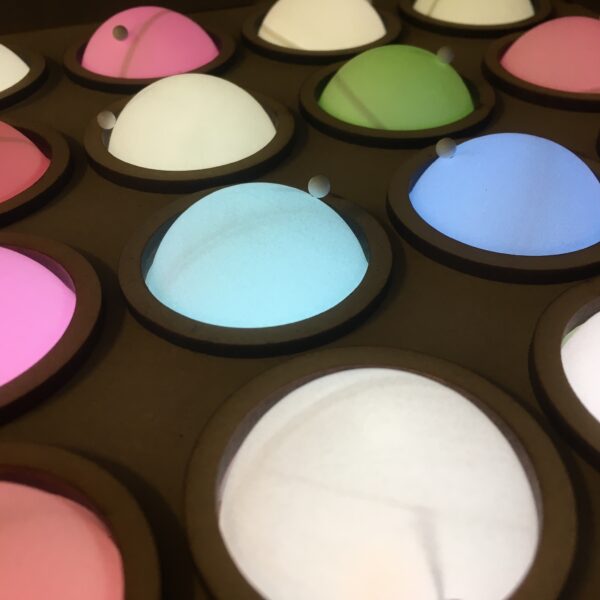
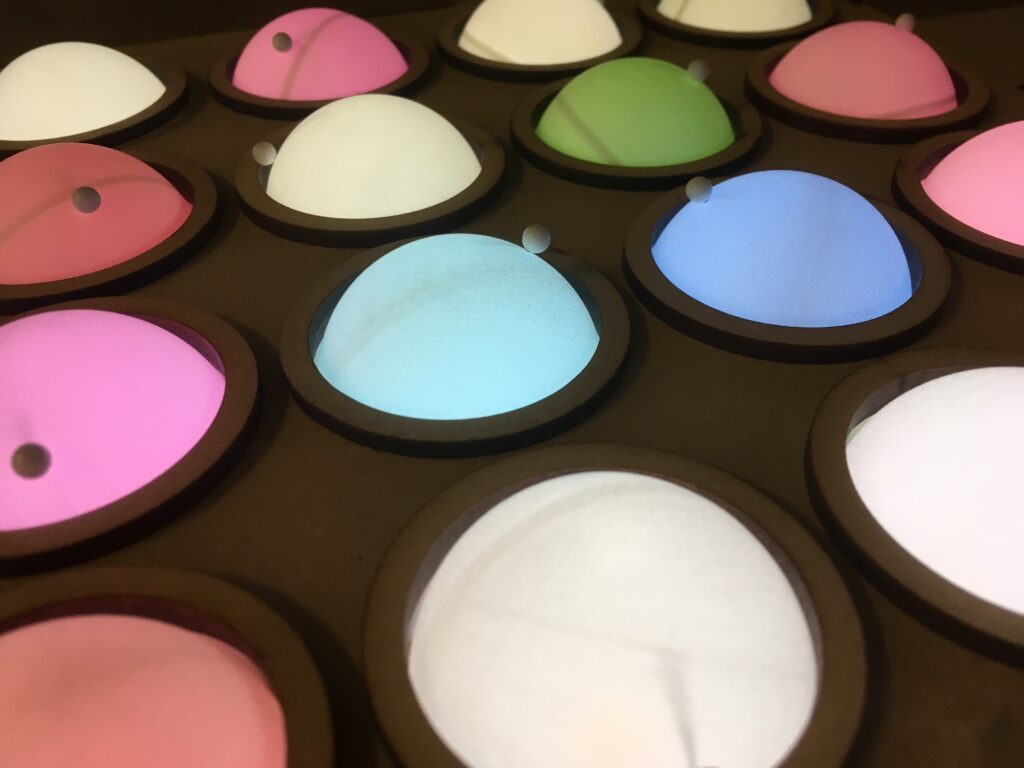
Koloropong is a low-tech interactive light installation inspired by vintage toys such as the Lite-Brite of the 1980s. It proposes a simple and tactile way to create a colorful luminous display without screens, computers, or digital interfaces. The installation is composed of thousands of ping-pong balls, each acting as a physical pixel. Each ball changes color according to its orientation, and visitors modify the image by manually rotating them.Interaction is immediate, intuitive, and embodied. Turning a single ball already produces a visual response, its a modest yet deeply satisfying gesture. This elementary action invites repetition, attention, and care.
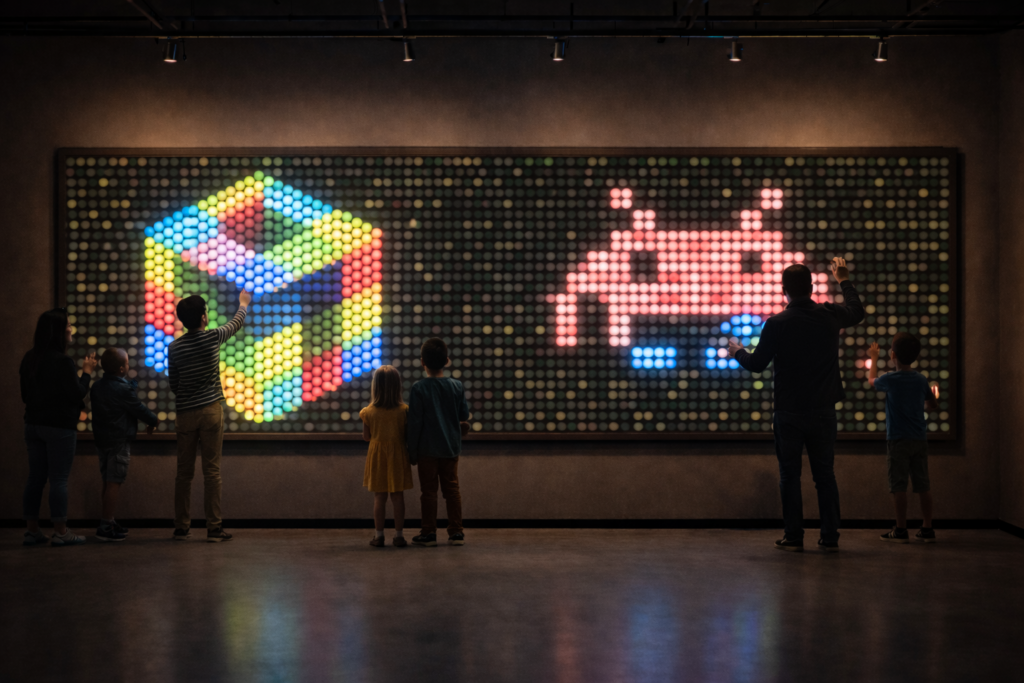
As more people engage with the wall, individual gestures gradually merge into shared compositions.
Images emerge slowly, requiring patience, coordination, and collective attention. This deliberate slowness contrasts with today’s culture of instant, automated image production. By reintroducing friction into the act of making images, Koloropong makes their construction visible, physical, and time-consuming. The installation fosters collaboration and negotiation: visitors observe one another, adjust their actions, and accept imperfection. The image remains in constant evolution, shaped by collective decisions and accidental gestures.
Free from screens, software, and algorithms, Koloropong shifts focus back to the body, the hand, and shared presence by turning the wall into a living, communal canvas where making images is about time spent together rather than speed or efficiency.